
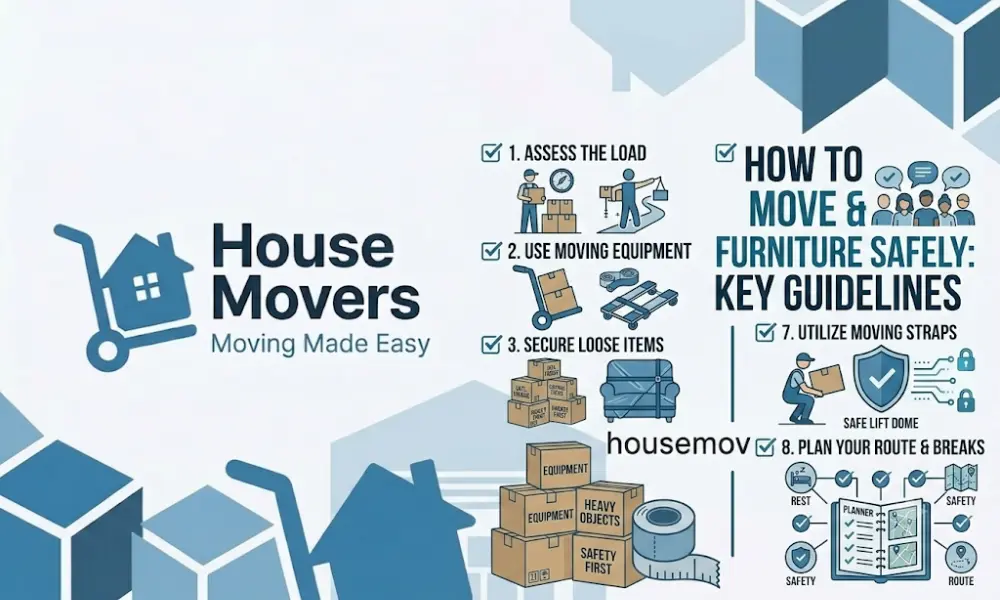
Moving a heavy couch or wardrobe can hurt more than your back. It can scratch your floor. It can dent your wall. Most people just grab a corner and lift, and that is where trouble starts. Learning how to move heavy furniture safely keeps you and your home safe.
A clear path, the right moving equipment, and good lifting technique make the job much easier. Each piece of furniture is a bit different too. A dresser is not the same job as a dining table. So what actually needs to happen before you lift anything heavy?
Plan Your Route Before You Lift Anything
Planning matters just as much as lifting. Before moving anything, walk through your home and check all doorways, hallways, and stairwells along the route.
- Measure the furniture you plan to move
- Compare those measurements with your doorways, hallways, and stairwells
- Remove rugs, cords, and small objects
- If a piece seems too wide, remove the door from its hinges to create more space
A clear path prevents most problems from even occurring.
Gather the Right Moving Equipment
Injuries often happen because of poor lifting technique, not just the weight of the furniture itself. A lot can be done with just a few simple tools.
- Furniture sliders ensure that legs slide smoothly on the floor without causing any damage.
- Moving straps distribute weight over shoulders, not arms.
- A dresser and heavy cabinets can be rolled with a dolly or hand truck.
- Use moving blankets around corners, walls, and door frames.
Renting these tools for one day often costs less than fixing a scratched floor.
Take Furniture Apart Where You Can
It’s always better to carry a smaller piece than a large awkward shape.
- Pull out drawers, shelves, and cushions before you lift
- Take off table legs, bed frames, and mirrors if you can
- Keep screws and bolts in a bag so you don’t lose them
Once a piece is lighter, the next step is lifting the rest of it the right way.
Use Safe Lifting Habits
Bad lifting habits hurt people, not just heavy weight on its own. A few small habits protect your back and your furniture together.
- Bend your knees, not your back
- Keep the item close to your body
- Never twist your spine while you carry something
- Always lift with a partner for anything big or awkward
Still feels too heavy after all that? Stop, and call for another pair of hands.
Move Heavy Pieces Room by Room
Every room brings its own challenge, so each piece needs its own short plan.
- Bedroom: Empty the dresser drawers and slide the bed frame on sliders
- Living room: Turn a sofa on its side to fit through narrow doors
- Dining room: Take off table leaves and wrap glass tops on their own
- Special items: Pianos and pool tables need trained hands, like a piano removalist or a pool table removalist
Tricky pieces like these are often where a professional team is truly worth the call.
Protect Your Floors, Walls, and Door Frames
Most damage happens in one careless second, not from bad luck. A little padding stops most of it before it starts.
- Lay down cardboard or old rugs in busy areas
- Wrap door frames and stair corners with moving blankets
- Put painter’s tape on trim so paint does not chip
Careful professional packing at this stage protects your furniture and your home.
When to Call Professional Movers
Some jobs are just not worth doing alone. Pianos, safes, antiques, and marble pieces often need trained hands.
- Big or awkward items with no easy grip
- Tight staircases or sharp turns
- Not enough helpers, or worries about your back
A skilled furniture removal team, or a two men and a truck service, brings the right gear for tricky jobs. A full house removal team can take care of the entire removal process for a larger move.