
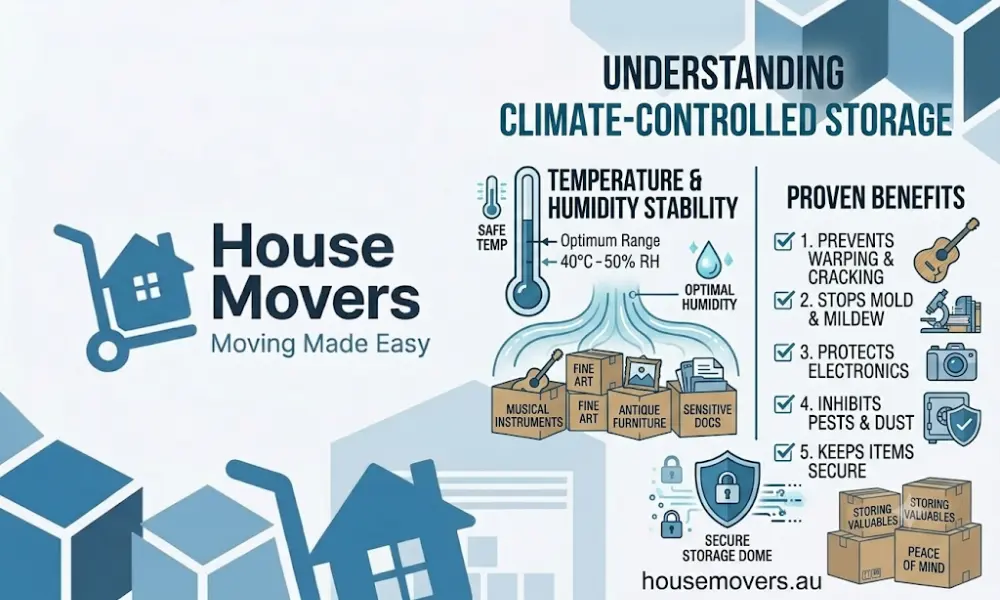
Climate-controlled storage keeps your stuff safe while you move. It holds the temperature steady between 15°C and 25°C. It also keeps moisture levels low, usually below 55%. This protects your things from heat, mould, and humidity damage. So, is temperature-controlled storage actually worth paying extra for? It depends on what you own and how long it sits in storage.
What Is Climate-Controlled Storage and How Does It Work?
A climate-controlled storage unit does two things. It controls the temperature. It also controls the humidity inside the unit. That second part is what most people miss. A regular air-conditioned unit only cools the air. It does nothing about moisture. A climate-controlled self-storage unit tackles both problems at once. That makes a big difference in the long run.
Why Australia’s Weather Makes Climate Control a Smart Choice
Australian summers are brutal. Standard storage units heat up fast and trap moisture inside. That combination ruins more belongings than most people expect.
The risks are different depending on where you live in Australia, so it helps to know what your city actually throws at stored items.
How Humidity and Heat Wreck Your Belongings
Sydney and Brisbane get hot and sticky in summer. That humidity gets into everything. Timber swells. Fabric grows mould. Electronics rust from the inside. A humidity-controlled storage unit cuts off that moisture before it causes damage.
How Dry Heat and Temperature Swings Do the Same Damage
Perth and Adelaide get scorching dry heat. That dries out timber, leather, and plastic until they crack. Melbourne flips between cold mornings and hot afternoons. Items expand and shrink over and over again. Joints loosen. Finishes peel. Indoor, climate-controlled storage prevents those swings from causing any harm.
What Items Actually Need Climate-Controlled Storage?
Not everything you own needs this level of protection. But some things really do suffer without it.
If you know what you will be storing, it will be easier to know if you need a climate-controlled storage facility or not.
Furniture and Soft Furnishings
Furniture made of wood swells when wet and contracts when dry. Leather becomes cracked and rotted. Mould and moisture will penetrate mattresses and cushions within a short period of time. If you need to store a couch, bed, or dining set, then move it to a climate-controlled storage unit. You will thank yourself later.
Electronics and Appliances
Moisture gets into circuit boards. It corrodes metal contacts. It fries components from the inside without any visible warning. TVs, laptops, microwaves- all of these are at risk in a standard unit. A climate-controlled self-storage unit keeps the air dry and your electronics safe.
Artwork, Antiques, and Valuables
Canvas warps. Paint cracks. Old wood loses its finish. Antiques are especially fragile because they were not built for modern storage conditions. If your item has sentimental or financial value, climate-controlled indoor storage is not optional. It is necessary.
Documents, Photos, and Books
Old photos stick together in humid air. Tax files and legal records go yellow and brittle. Books grow mould along the spine. These things cannot be replaced. Store them in a temperature-controlled storage unit, and they will stay in good shape for years.
Climate-Controlled vs Standard Storage: A Simple Way to Decide
For garden implements, sporting equipment, weather-proof furniture and larger items that can be stored on the back shelf, standard storage is adequate. They were designed for outdoor use, anyway.
If you have wood, paper, leather, fabric, or circuit board-containing items in your belongings, then climate-controlled storage will be your choice. It’s a minor cost compared to replacing items that are destroyed.
Simple Tips to Prepare Your Items Before Storage
Good packing makes temperature-controlled storage work even better. A few easy steps go a long way.
Clean everything before it goes in. Leftover moisture or food residue continues to cause damage, even in a controlled unit. Use strong boxes with proper lids. Wrap timber and leather in breathable cloth, never plastic. Plastic holds moisture against the surface. Label each box by what is inside, not just the room it came from. Put heavy boxes on the bottom and fragile ones near the top.
How the Right Moving Team Protects Your Belongings Too
Getting the right storage unit is only half the job. How your things are packed and moved before they reach storage matters just as much.
Our professional packing service ensures every item is wrapped and boxed properly. Even a good climate-controlled storage unit cannot repair damage caused by a careless move. Our furniture removal team handles timber, glass, and upholstered pieces with proper protective materials at every step. For pianos and other heavy musical instruments, our piano removalist team brings the right equipment and experience. And if you are moving between cities and need storage along the way, our long-distance moving service keeps your move connected from start to finish.